Saxophone Sticky Pads: Safe First Checks
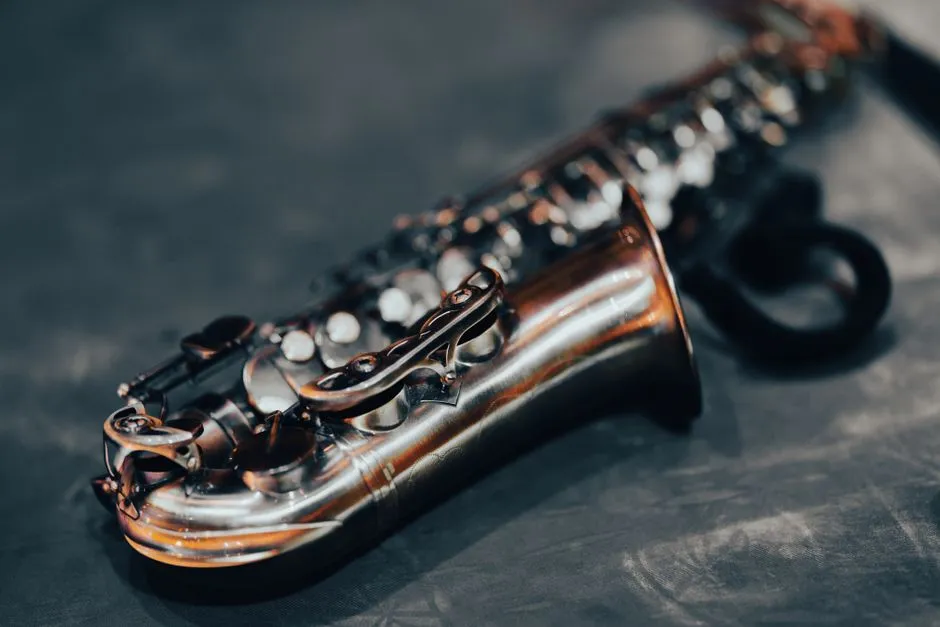
- What to do when a saxophone pad sticks
- First decide whether the pad or the mechanism is sticking
- Remove routine moisture before treating stickiness
- When manufacturer-approved powder paper is appropriate
- Why common improvised treatments are excluded
- Use timing to give the technician better evidence
- Check storage without turning the case into a drying cabinet
- Know the repair threshold
- Keep hearing symptoms separate from instrument symptoms
- The safe first-check sequence
- Sources
What to do when a saxophone pad sticks
First identify whether the pad itself is tacky or the key mechanism is binding. Support the saxophone, operate the affected key once with normal light pressure, and note what happens. Then follow the exact instrument manufacturer's drying instructions. Yamaha directs players to use approved cleaning paper for damp pads and, after moisture is removed, approved powder paper for a sticky pad. Do not substitute loose powder, currency, abrasive paper, oil, solvent, cleaner, adhesive, or heat.
If the key will not open normally, collides with another part, has an exposed spring, looks bent, or still sticks after the approved care step, stop playing. Pad seating, springs, rods, screws, and linked-key adjustments belong with a qualified repair technician.
First decide whether the pad or the mechanism is sticking
"Sticky key" describes a result, not a diagnosis. Four observations point in different directions:
| What happens under light normal action | What it may indicate | Player action |
|---|---|---|
| The key opens on time but makes a tacky sound | Surface moisture or residue may be present | Complete the model's approved drying routine and reassess |
| The key opens slowly after being closed | A tacky pad may be holding briefly, but alignment or spring action can feel similar | Use only the approved pad-care method; arrange service if it repeats |
| The key stays closed or needs extra force | The pad, spring, rod, screw, or linked mechanism may be involved | Stop; do not force it or continue playing |
| One key moves and another key binds or collides | Connected keywork may be out of relationship | Stop and use a qualified technician |
Do not press harder to learn more. Increased finger force can bend connected mechanisms and turn a small service issue into a larger one.
Keep fingers away from exposed or displaced springs and pinch points. Do not touch a sharp spring or attempt to hook it back into place. If a mechanism cuts or punctures skin, stop handling the instrument, use appropriate first aid, and seek urgent medical care for severe bleeding, a deep injury, or loss of movement or sensation.
Remove routine moisture before treating stickiness
Moisture is the first controllable variable. Follow the manufacturer's after-playing cleaning routine with a clean, dry, undamaged swab sized for the instrument. Remove the reed and dry removable parts as directed. Keep free liquid away from pads and mechanisms.
Yamaha's saxophone care guide distinguishes cleaning paper from ordinary paper. For a damp pad, it instructs the player to place cleaning paper between the pad and tone-hole opening, press the key lightly several times, move to a different part of the paper, and repeat the process two or three times. It explicitly says not to pull the paper out while the key is depressed.
That last detail matters. The safe motion is:
- support the saxophone in the position the model manual permits;
- open the key using only its normal action;
- place the approved cleaning paper between pad and tone hole;
- close the key lightly several times;
- open the key fully before removing the paper;
- use a fresh area of paper and repeat two or three times as directed.
Do not drag paper across the pad while it is clamped shut. Do not wedge a key open or closed beyond its normal movement. If the exact model manual differs, follow that manual.
When manufacturer-approved powder paper is appropriate
Loose powder and purpose-made powder paper are not the same treatment. Do not pour or brush talc, cosmetic powder, graphite, or any household powder onto a pad. Yamaha identifies its own powder paper as a pad-care product and gives a controlled method for it.
The Yamaha product instructions say to remove all moisture with cleaning paper first. Then place the powder paper between the pad and tone hole with the non-printed side facing the pad, gently close the key a few times, open the key, and remove the paper. Repeat two or three times on a different part of the sheet. Do not remove the paper while the key is closed.
Use that method only when it is approved for the instrument and with the specified product or a model-approved equivalent. A generic sheet described online as "powder paper" does not prove compatible ingredients, surface, or orientation. If the maker does not authorize it, ask a qualified technician what to use.
Powder paper is a care step, not a repair. It cannot correct a torn pad, changed pad height, bent key, weak or displaced spring, loose screw, damaged tone hole, or poor seating.
Why common improvised treatments are excluded
Do not use a banknote, receipt, cigarette paper, sandpaper, nail file, cotton swab under pressure, adhesive note, or abrasive strip. Their fibers, coatings, dirt, edges, or abrasion are not controlled for the pad surface. Do not pull any material through a closed key.
Do not apply oil to the pad. Key oil is a different product for specified mechanical points under manufacturer instructions; it is not a pad cleaner. Do not apply lighter fluid, alcohol, solvent, household cleaner, adhesive, or heat. Those methods can damage pad material, lacquer, adhesive, or nearby parts and can introduce inhalation, skin, eye, or fire hazards.
After an unexpected chemical exposure, contact a local poison center for case-specific guidance. In the United States, Poison Control provides online help and the number 1-800-222-1222. Use local emergency services for life-threatening symptoms.
Do not loosen screws or alter spring tension. Saxophone mechanisms are interconnected, and exposed springs can be sharp. Yamaha's maintenance guidance says key removal is not a player cleaning step and recommends taking the instrument to a music shop for that work.
Use timing to give the technician better evidence
A short observation record is more useful than repeated experiments. Note:
- the exact key or keys affected;
- whether the problem appears during playing, immediately after playing, or after storage;
- whether the key is merely noisy, opens slowly, stays closed, or binds against another part;
- whether the instrument was recently dropped, transported, exposed to liquid, or serviced;
- the approved cleaning or powder-paper step used and its result;
- whether a note leaks or response changes.
Do not add an unapproved treatment to make the symptom temporarily disappear before assessment. Tell the technician what was applied, including a product name, if anything contacted the pad accidentally.
Check storage without turning the case into a drying cabinet
Moist swabs, cleaning papers, and reeds should not be sealed against the instrument. Let approved removable care items dry as their makers direct before storing them. The saxophone storage guide explains fitted-case support, stable placement, and pressure on keywork.
Henri SELMER Paris advises wiping the saxophone interior after each use, never leaving a wet swab inside the tube, and avoiding long storage in a closed case while residual moisture remains. It notes that residual moisture can swell pads and contribute to deterioration. Its guidance also warns against solvents.
Store the instrument away from direct heat, liquid, unstable temperature, and pressure on keys. Do not add unapproved clamps, wedges, or paper between pads for long-term storage. A manufacturer-specific transport device must be fitted and used exactly as directed.
Know the repair threshold
Arrange qualified repair when any of these is true:
- sticking returns after approved drying or approved powder-paper care;
- the pad looks torn, displaced, swollen, hardened, or uneven;
- a key closes unevenly or leaks;
- a spring, screw, rod, guard, or linkage looks abnormal;
- normal light key action binds or a connected key collides;
- the saxophone was dropped or exposed to liquid;
- the same symptom affects playing response repeatedly.
The repair-threshold guide explains related signs that routine player care cannot resolve.
Do not continue a rehearsal on a key that remains closed or releases unpredictably. Secure the instrument in its fitted case for transport. Do not resume playing until the mechanism moves normally after approved care or a qualified technician has assessed it.
Keep hearing symptoms separate from instrument symptoms
A sticky pad does not explain a sudden change in a player's hearing. The National Institute on Deafness and Other Communication Disorders says long or repeated exposure at or above 85 dBA can cause hearing loss, and that louder sound shortens the time needed for harm. Its noise-induced hearing loss guidance advises reducing noise, using hearing protection, or moving away when noise cannot be reduced.
Treat level, duration, and distance together. NIDCD says sudden-deafness symptoms are a medical emergency and advises visiting a doctor immediately; its sudden-deafness guidance explains that delay can reduce treatment effectiveness.
The safe first-check sequence
- Support the instrument and identify the exact symptom with one light test.
- Stop immediately for binding, collision, damage, an exposed spring, or a key that stays closed.
- Complete the manufacturer's normal swabbing and moisture-removal routine.
- If authorized, use the exact cleaning-paper method without pulling paper through a closed key.
- If the pad remains sticky and the maker authorizes it, use approved powder paper only after moisture is removed.
- Arrange technician service if sticking repeats or any mechanical sign remains.
A sticky sound may come from the pad surface, but it can also accompany a mechanical problem. Use the maker's controlled care method once, document the result, and keep repair work at the repair bench.
Sources
- Yamaha: care and maintenance after playing provides the saxophone cleaning-paper sequence, two-or-three-repeat instruction, warning not to pull paper while the key is depressed, powder-paper route, and no-disassembly boundary.
- Yamaha Powder Paper instructions specify drying first, non-printed side toward the pad, gentle closing, two or three repetitions on fresh areas, and removal only while the key is open.
- Henri SELMER Paris saxophone maintenance supports after-use swabbing, keeping a wet swab out of the instrument, avoiding solvents, and the residual-moisture storage caution.
- Poison Control supplies the United States online exposure route and phone number used above.
- NIDCD on noise-induced hearing loss and sudden deafness support the separate hearing care line.