Store a Saxophone to Protect Keys, Pads, and Reeds
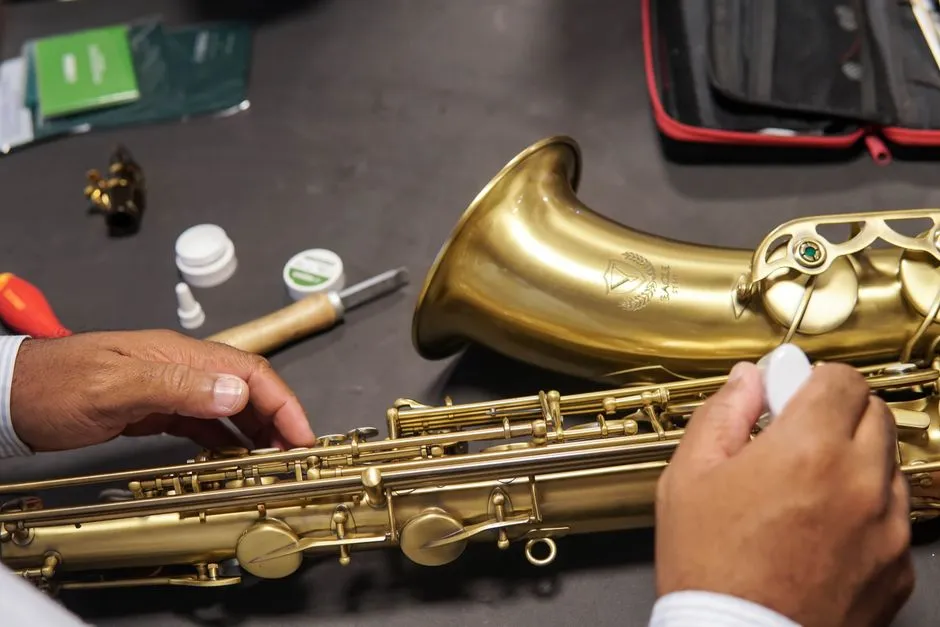
Use the fitted case for routine protection
Store a saxophone dry, disassembled as its manufacturer directs, and secured in its fitted case with every component in the correct compartment. Keep the case stable, closed, and away from direct heat, liquid, unstable temperature, heavy objects, children, pets, and traffic. A stand is for temporary access only when its maker and the instrument maker approve it.
Dry before closing the case
Follow the after-playing cleaning routine. Remove routine moisture with approved tools, dry the mouthpiece and neck according to their materials, and place reeds in a ventilated holder.
Do not put a wet swab or reed against the instrument inside a closed case. Follow case-maker guidance about ventilation; leaving a case open can create fall, access, or contamination risks and is not a universal drying method.
Fit every part into its space
Return the body, neck, mouthpiece, and approved accessories to shaped compartments without pressure on keys, rods, springs, cork, or the mouthpiece tip. Loose objects can move during transport and strike mechanisms.
Do not force extra books, stands, cables, bottles, or tools into the instrument compartment. Use a separate bag when the case has no designed storage.
Choose a stable location
Place the closed case flat or in the orientation its manufacturer specifies, where it cannot fall or be stepped on. Avoid shelves with unstable edges and floors exposed to leaks or traffic.
Do not leave the instrument in a vehicle or beside heaters, radiators, direct sunlight, open windows, or other uncontrolled environments. Temperature and moisture changes can affect materials, pads, adhesives, cork, and finish.
Use stands only for short supervised pauses
Use a stable stand designed for the instrument on a level, clear floor, following both manufacturers. Keep it away from walking routes, doors, cables, chairs, and places where children or pets can reach it.
Never place a stand where a fall could hit someone. For longer storage, transport, or an unattended room, return the instrument to its fitted closed case.
Protect reeds and care tools
Store reeds according to reed-care guidance in a clean, ventilated holder protected from crushing. Let swabs dry as directed outside the instrument compartment, then store them untangled where their cords cannot catch keys.
Do not keep liquids, grease without a secure cap, or unapproved chemicals where they can leak onto the saxophone or contact skin or eyes. Follow every product label and keep volatile products out of the case.
If unexpected inhalation, skin, or eye exposure occurs, contact a local poison center for case-specific guidance; in the United States, Poison Control provides online help and 1-800-222-1222. Call local emergency services for severe breathing difficulty, collapse, or other life-threatening symptoms.
Inspect after transport or impact
If the case falls, is crushed, becomes wet, or experiences extreme conditions, do not assume the padding prevented damage. Inspect without forcing mechanisms and arrange a qualified technician when keys bind, parts shift, pads change, or the case no longer supports the instrument correctly.
The guide to when a saxophone needs repair explains which observations are safe and which faults require bench work.
Inspect the case itself
Periodically inspect the case for failed latches, compressed supports, moisture, odor, or loose interior material. Replace or repair a case that no longer secures the instrument.
Correct storage uses dry parts, fitted spaces, a stable closed case, and no pressure on mechanisms. Replace or repair any case that cannot secure the instrument reliably.